What If Sharing Family Moments Online Put Your Loved Ones at Risk?
Imagine excitedly sharing your child’s first steps or a surprise birthday party with distant relatives—only to realize strangers might be watching too. We all want to stay close through photos and messages, but what if that connection comes at a hidden cost? In our digital age, family communication tools bring us together, yet quietly expose our most precious memories. It’s not about stopping sharing—it’s about doing it more thoughtfully. Because the same technology that lets Grandma see her grandchild’s first words can also leave your family’s private life visible to people you’ve never met. Let’s talk about how to share freely while keeping your family’s privacy truly protected.
The Joy of Staying Close: How Technology Connects Modern Families
There’s something truly special about opening your phone and seeing a video of your niece blowing out birthday candles, even when she lives across the country. Or getting a photo of your dad teaching your son how to ride a bike—something you’d have missed just a decade ago. Technology has quietly woven itself into the heart of family life, turning distance into a minor detail. We video call during breakfast, send voice notes while folding laundry, and share albums of holiday trips with one tap. These moments don’t just feel convenient—they feel emotional, real, and deeply connecting.
Think about how often you reach for your phone to share something small: a drawing from your kindergartener, a funny comment from your teenager, a quiet sunset from your back porch. These aren’t just posts or messages—they’re love notes in digital form. For grandparents who can’t travel easily, these glimpses are lifelines. For siblings scattered across states, group chats keep the bond alive. And for parents juggling work and family, sending a quick update feels like a small act of care. But here’s the thing we often overlook: every time we hit “send,” we’re not just sharing with family. We’re also handing pieces of our private world to platforms, algorithms, and sometimes, unintended eyes.
The ease of sharing has made it almost automatic. We don’t always stop to ask: Who else can see this? How long will it stay online? Could this photo tell someone more than I mean to share? It’s not that we’ve become careless. It’s that the tools we use are designed to make sharing effortless—so effortless that we rarely pause to consider the ripple effects. And while the joy of connection is real, so are the quiet risks building beneath the surface.
The Hidden Cost of Clicking “Share”
Let’s be honest: most of us don’t think twice before posting a photo of our child in a school play or tagging a location at a weekend getaway. But behind that simple action, there’s a trail of data that can be collected, stored, and even misused. When you share a photo, it’s not just the image that gets shared. Often, it carries hidden details—like the exact time it was taken, your phone model, and sometimes, your precise location. This is called metadata, and while it sounds technical, it’s really just digital breadcrumbs that can lead straight to your front door.
Imagine posting a video of your daughter’s recital, not realizing the school’s name and address are visible in the background. Another parent might see it and think, “How sweet.” But someone with less kind intentions could use that information to track patterns—when the school is busy, when it’s quiet, who drops off kids. Or consider a family group chat where someone shares a screenshot of a home security alert. That image might seem harmless, but if it shows camera angles or entry points, it could give clues to someone looking for vulnerabilities.
And it’s not just photos. Voice messages, text updates, even emoji reactions can be collected and analyzed by apps. Some platforms store your data on servers that aren’t fully protected. Others allow third-party companies to access your information for advertising or research—without your clear understanding. You might think you’re only talking to your sister, but the app might be listening too, learning your habits, and using that knowledge in ways you didn’t agree to. The problem isn’t that these tools are evil—it’s that we often use them without knowing the full story.
Even something as simple as a birthday wish can carry risk. If you post “Happy 8th birthday, Emma!” with a photo, you’re sharing her name, age, and face—information that can be used in identity scams or targeted ads. And if your settings are public, that post could be seen by anyone, anywhere. The truth is, once something is online, you lose some control over where it goes. And while most people share with good intentions, not everyone online has your family’s best interest at heart.
Real Stories, Real Consequences
Let me tell you about a family I once heard about—let’s call them the Millers. They were excited to share their beach vacation online. Beautiful sunsets, kids building sandcastles, a video of their dog chasing waves. They tagged the location because they wanted friends to know about the great spot. A few days after they got home, they discovered someone had broken in. Nothing expensive was taken, but family photos, a laptop, and the kids’ backpacks were gone. Later, the police said it looked like someone had been watching their posts—knowing exactly when the house would be empty.
Then there’s the story of Linda, a grandmother who received a message that looked like it came from her daughter. It said, “Mom, I’m in trouble—can you send money?” It included a photo of a hospital room and sounded just like her daughter’s voice. Heart racing, Linda wired money before realizing it was a scam. The voice wasn’t her daughter’s—it was a deepfake, created using voice clips from old family videos that had been shared widely online. The scammers didn’t break in. They didn’t need to. They just listened, waited, and used what they found.
Another family had a group chat where they planned a surprise party. One member used a free messaging app that didn’t encrypt messages. Hackers accessed the chat, learned the date, time, and address, and showed up pretending to be caterers. They didn’t steal anything, but they took photos inside the home and later tried to sell them. The family felt violated—not just because of the intrusion, but because their moment of joy had been turned into a target.
These aren’t rare, extreme cases. They’re becoming more common. And the saddest part? In most of these situations, a few simple precautions could have made all the difference. The Millers didn’t know their location was visible. Linda didn’t realize her family’s videos were public. The party planners didn’t know their app wasn’t secure. These families weren’t careless. They were just unaware. And that’s the real issue: we trust technology because it makes life easier, but we don’t always know what we’re trusting it with.
Understanding Privacy Without the Tech Jargon
Let’s clear something up: you don’t need to be a tech expert to protect your family. You just need to understand a few key ideas—explained in plain, everyday language. Take “end-to-end encryption.” It sounds complicated, but think of it like this: when you send a letter in a sealed envelope, only the person with the key can open it. That’s encryption. If a message is end-to-end encrypted, only you and the person you’re sending it to can read it—not the app, not the company, not hackers sneaking in. It’s like having a private conversation in a crowded room, but no one else can hear a word.
Then there’s “two-factor authentication.” This is just an extra lock on your account. Imagine your password is the key to your house. Two-factor authentication is like adding a fingerprint scanner. Even if someone finds your key, they still can’t get in without your fingerprint. It’s one of the easiest ways to keep your accounts safe, and most apps offer it for free. Turning it on takes just a few minutes, but it can stop most hacking attempts before they start.
Another important idea is “data ownership.” That means knowing who controls your photos, messages, and videos. Some apps say they let you share privately, but in their fine print, they also say they can use your content for ads or research. That’s like letting someone borrow your family photo album—and then finding out they made copies to sell. Always check what the app says about your data. Look for tools that say you own your content and that they won’t use it without your clear permission.
And don’t forget about “automatic backups.” Many phones and apps save your photos to the cloud without asking. That can be helpful if you lose your phone, but it also means your private moments are stored on servers you don’t control. Some of these servers have been hacked in the past. The fix? You can choose where your photos go. You can turn off automatic uploads or pick a service that stores data locally—meaning it stays on your own devices unless you decide otherwise. Small choices like this give you back control.
Choosing Tools That Protect as Much as They Connect
Not all apps are created equal. Some are built for connection, others for profit. The ones that make money from ads often collect more data because they want to show you targeted content. The ones focused on privacy might not be as flashy, but they’re designed to keep your family safe. So how do you tell the difference? Start by asking a few simple questions: Does this app explain how it protects my data? Can I control who sees my messages and photos? Does it use encryption by default?
Look for tools that update regularly. Software updates aren’t just about new features—they often fix security holes. If an app hasn’t been updated in over a year, it might not be safe. Also, check the privacy policy. I know, it sounds boring, but you don’t have to read every word. Just look for clear language about data collection and user rights. If it’s full of confusing terms or says the company can share your data “for business purposes,” that’s a red flag.
Another smart move? Use different apps for different things. Don’t use a public social media platform to share private family moments. Instead, pick a secure messaging app for close relatives and save the public posts for general updates. You can even create private groups where only invited members can join. Think of it like having a family-only photo album instead of leaving pictures on a public bulletin board.
And be careful with free tools. Many “free” apps make money by selling data or showing ads. If you’re not paying for the service, you might be the product. That doesn’t mean all free apps are bad, but it’s worth asking: What’s the trade-off? Is convenience worth the risk? Sometimes, paying a small monthly fee for a trusted service is a better deal than giving away your privacy for free.
Building a Family Culture of Digital Safety
Protecting your family online isn’t just your job—it’s something everyone can be part of. That includes kids, teens, and older relatives. The key is to talk about it in a way that doesn’t feel scary or controlling. Start with a simple conversation: “We love sharing moments, but let’s make sure we’re keeping each other safe while we do it.” Ask your kids what they think about privacy. You might be surprised how aware they are.
For younger children, use stories. “Imagine if a stranger knew your school name, your routine, or your face. How would that feel?” For teens, focus on respect. “Would you want your little sister’s photo shared without her permission? Then let’s ask before we post.” And for older family members, be patient. They might not understand all the tech, but they care about safety. Show them how to recognize fake messages, how to use strong passwords, and how to report something suspicious.
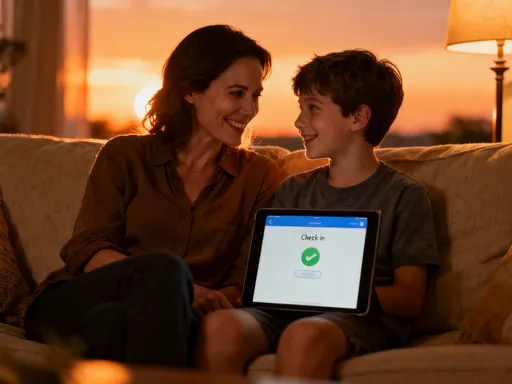
Make digital safety a regular habit, like changing smoke detector batteries or cleaning out the fridge. Set a reminder to review your shared albums once a month. Delete old posts that no longer feel right. Check who’s in your family groups and remove anyone who shouldn’t be there. Have a “digital check-in” once a season—just like a health check-up—where you talk about what’s working and what might need to change.
You can even make it fun. Turn it into a family activity: “Let’s go on a privacy treasure hunt! Who can find the settings that turn off location tags?” Or create a family rule: “We don’t post anything that includes another person without asking first.” These small habits build a culture of care, where protection isn’t a burden—it’s part of how you love each other.
Sharing Freely, Living Peacefully: The Balance We All Deserve
Here’s the truth: we don’t have to choose between connection and safety. We can have both. We can still send that video of your toddler dancing in the kitchen. We can still share the laugh-out-loud text from your teenager. We can still let Grandma watch the school play in real time. The difference is doing it with awareness, with intention, with love that includes protection.
When we take steps to secure our digital lives, we’re not being paranoid—we’re being responsible. We’re saying that our family’s peace of mind matters. That our children’s innocence deserves to be shielded. That our memories are precious, not public content. And that staying close doesn’t mean leaving the door open for anyone to walk in.
Technology, at its best, should feel like a quiet helper—there when you need it, invisible when you don’t. It should bring joy without anxiety, connection without cost. And that’s possible, as long as we take a moment to understand the tools we use. Because the most beautiful moments in life aren’t just meant to be shared. They’re meant to be kept safe, too.
So go ahead—capture the laughter, save the milestones, send the love. But do it wisely. Adjust a setting. Start a conversation. Choose a better app. These small acts add up to something powerful: a digital home that’s as warm, safe, and loving as the one you’ve built in real life. And that’s a legacy worth protecting.