From Overwhelmed to Empowered: How Emergency Tech Brought Peace to Our Home
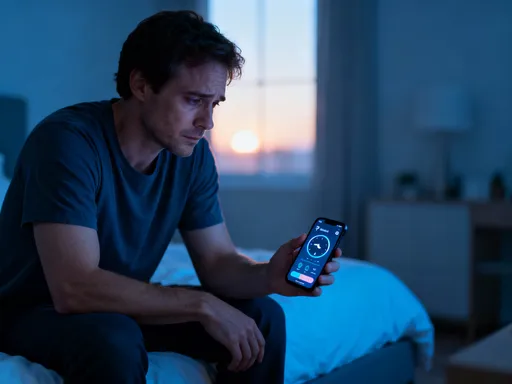
Imagine lying awake, worrying whether your aging parent fell and couldn’t reach the phone—or if your child got home safely after school. These quiet fears chip away at peace of mind every day. I used to juggle check-in calls, panic over missed texts, and feel guilty when life got busy. Then everything changed. With the right emergency assistance system, our family didn’t just gain safety—we gained freedom. Let me show you how simple, thoughtful technology can turn constant worry into quiet confidence.
The Moment Everything Changed
It was a rainy Tuesday evening when my world narrowed to a single unanswered phone call. I’d texted my mom earlier—just a quick “Hope you’re doing well!”—but by 7 p.m., no reply. That wasn’t unusual, really. She often forgot her phone in the kitchen while watering plants or watching her favorite gardening show. But that night, something in me tightened. I called again. And again. Still nothing. My thoughts spiraled: What if she slipped in the bathroom? What if she couldn’t reach the phone? I live 20 minutes away—20 minutes that suddenly felt like an eternity. I drove over, heart pounding, imagining the worst. When I walked in, she was fine, curled up on the couch with a book, her phone buried under a sweater. She hadn’t even heard it ring.
But in that moment, I realized how fragile our sense of control really was. We weren’t doing anything wrong—we loved each other, we checked in, we cared deeply. Yet we were living one missed call away from panic. That night wasn’t about an emergency. It was about the emotional weight of uncertainty. The fear wasn’t of danger itself, but of being too late. Of not knowing. Of help being just out of reach. I sat on her couch, breathing deeply, and made a quiet promise: I wanted to live with more confidence, not more fear. I didn’t want to be reactive. I wanted to be ready.
Living in Reactive Mode: Life Before Smart Emergency Systems
Before we found a better way, our approach to safety was scattered and stressful. We relied on memory, timing, and a lot of hope. I had a mental checklist: call Mom at 10 a.m., text my daughter when she left school, double-check the babysitter’s number before heading to yoga. It wasn’t sustainable. Life got busy. Meetings ran late. Kids had playdates I forgot to account for. And every missed call, every delayed text, sent a jolt of anxiety through me. Was she okay? Did something happen? Why isn’t she answering?
My daughter started middle school that year, and suddenly, she was coming home alone. I tried to stay calm, but I’d find myself staring at the clock, calculating how long it should take her to walk from the bus stop. One afternoon, she was five minutes late. I called the school, then the bus driver, then a neighbor. Turned out she’d stopped to tie her shoe and chat with a friend. But in those five minutes, I had already imagined every worst-case scenario. I wasn’t being paranoid—I was just a mom who loved her child and felt powerless to protect her when I wasn’t there.
With my mom, it was worse. She lived alone, and while she was sharp and independent, I knew the risks. A fall. A sudden illness. Something small that could become serious if no one knew. We played this unspoken game of check-ins—she’d call after lunch, I’d call before bed—but it felt like walking a tightrope. Too many calls, and she’d feel micromanaged. Too few, and I’d feel guilty. It wasn’t just about safety. It was about trust, dignity, and the delicate balance of caring without controlling. We were living in reactive mode—always waiting for something to go wrong, never feeling truly prepared.
Discovering the Right Help: Finding Technology That Feels Human
I didn’t find the solution in an ad or a tech store. It came from a friend, over coffee, when she casually mentioned, “You’d sleep better.” That’s all she said. No sales pitch, no complicated explanation. Just those four words. She told me about the emergency system she’d set up for her dad—a simple button he wore around his neck, linked to a monitoring service. If he fell or felt unwell, he pressed it, and help came. Not family, not panic—just calm, professional support.
I was skeptical at first. I didn’t want to turn my mom’s home into a surveillance zone. I didn’t want her to feel watched or infantilized. And I worried it would feel cold, mechanical—like replacing human care with a machine. But my friend emphasized one thing: this wasn’t about replacing us. It was about supporting us. The system wasn’t there to take over. It was there to back us up when we couldn’t be there. She showed me how her dad still lived independently—he cooked, gardened, hosted friends—but now, if he needed help, it was just a button press away.
What won me over was how normal it felt. No blinking lights, no complicated setup. Just a small wearable device and a base unit that blended into the living room. I realized I wasn’t looking for a high-tech fix. I was looking for peace of mind. So I started researching—gently, quietly. I looked for systems that were easy to use, reliable, and respectful of privacy. I wanted something that felt like a helper, not a monitor. Something that gave my mom control, not took it away. And most importantly, I wanted something that didn’t require me to become a tech expert to set up. I wasn’t trying to build a smart home. I was trying to protect the people I love.
How It Actually Works: A Day in the Life of Feeling Safer
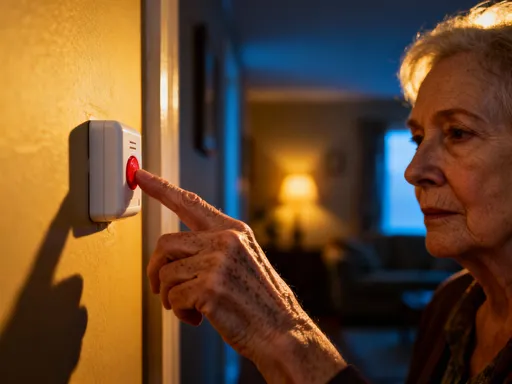
Let me walk you through a typical day now—how the system quietly supports our family without disrupting our routines. My mom wears a small pendant around her neck, lightweight and comfortable, like a piece of jewelry. It’s connected to a base station in her hallway. If she trips while walking to the kitchen, she can press the button. Within seconds, a live agent answers through the speaker: “This is Sarah from Emergency Support. Are you okay?” If she can’t speak, the system knows—she didn’t cancel the alert—and dispatches help right away.
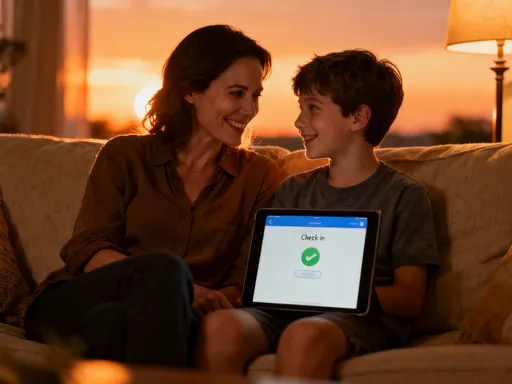
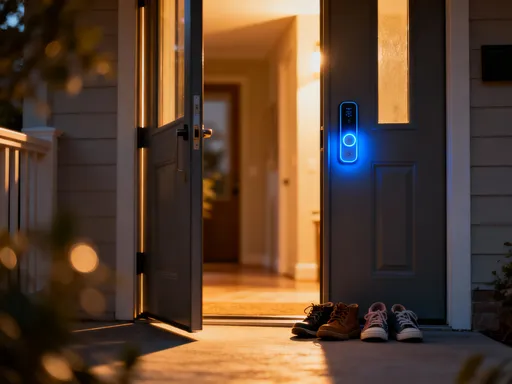
For my daughter, we use a smart entry sensor on the back door. When she comes home from school, she taps it—just a quick touch, like unlocking her tablet. I get a gentle notification on my phone: “Emma is home.” No text needed. No call. Just a quiet reassurance that she’s safe. If she forgets to tap it, I get a polite alert after 15 minutes: “No entry detected. Would you like to check in?” I can respond with one tap—“All good”—or call her directly. It’s not about tracking her. It’s about knowing she’s okay without interrupting her independence.
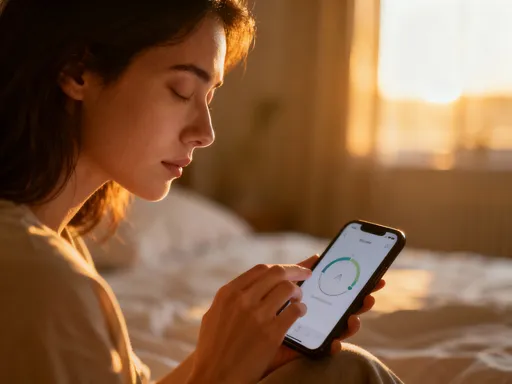
There’s also a medication reminder feature that chimes softly at 10 a.m. and 6 p.m. My mom takes a few daily pills, and while she’s usually consistent, there are days when she gets distracted. Now, a gentle voice says, “Time for your morning medications,” and she can press a button to confirm she’s taken them. If she doesn’t respond, I get a quiet alert. Not an alarm. Not a panic. Just a nudge. The beauty of it is how invisible it feels. No apps to master. No passwords. No confusing menus. Just simple, intuitive tools that work when needed and stay out of the way when they’re not.
Beyond the Button: Unexpected Emotional Benefits
I expected the system to make us safer. I didn’t expect it to make us closer. But that’s exactly what happened. With the constant pressure of check-ins lifted, our conversations changed. I stopped asking, “Did you take your pills?” and started asking, “How was your garden today?” My mom stopped feeling like she had to report in and started feeling like she could just live. She told me, “I don’t feel watched. I feel supported.” That meant everything.
For my daughter, the entry sensor gave her a sense of autonomy. She didn’t have to text me the second she walked in. She could drop her bag, grab a snack, change clothes—she didn’t have to perform safety for me. And I didn’t have to hover. I could trust the system, and in turn, trust her. Our arguments about check-ins faded. We started talking more about school, her friends, her dreams. The tech didn’t replace our connection—it made space for it.
There’s a deeper shift, too. Peace of mind isn’t just about preventing emergencies. It’s about dignity. It’s about letting people live fully, without fear holding them back. My mom still walks to the market, still hosts her book club, still insists on doing her own laundry. But now, if she needs help, it’s there—fast, quiet, and reliable. She’s not waiting for me to notice something’s wrong. She’s in control. And that changes everything. The system didn’t take away my role as a caregiver. It gave me room to be a daughter again—to listen, to laugh, to just be with her.
Making It Work for Your Family: Simple Steps to Start
If you’re thinking about something like this for your family, I want you to know—it’s easier than you think. You don’t need to be tech-savvy. You don’t need to overhaul your home. Start by asking one simple question: What keeps me up at night? Is it your aging parent living alone? Your teen coming home after dark? A medical condition that could flare up? Identify that one worry. That’s your starting point.
Next, look for systems that are designed for real life. Avoid anything that feels clunky or complicated. Look for things with 24/7 live monitoring, easy setup, and clear communication. Many companies offer free demos—take one. Let your loved one try the button, hear the voice, see how it feels. I’ll never forget the moment my mom pressed the test button and heard, “This is Maria from Emergency Support. How can I help?” She smiled and said, “Well, that’s nice. She sounds like someone I know.” That human touch made all the difference.
When you talk about it, focus on care, not control. Try saying, “This is for me, not just you. I’ll worry less, and that means I can enjoy our time together more.” Or, “It’s like having a safety net. You don’t think about it until you need it—but when you do, it’s there.” Start small. Maybe just the pendant for now. Or the entry sensor. You don’t have to do it all at once. The goal isn’t perfection. It’s progress. And the best part? Most systems don’t require long-term contracts. You can try it, see how it feels, and adjust as needed.
A New Kind of Calm: What We’ve Gained
Our home feels different now. Not because we’ve eliminated risk—life will always have uncertainty—but because we’ve replaced fear with readiness. I don’t lie awake wondering if my mom is okay. I don’t panic when my daughter is a few minutes late. I know that if something happens, help is fast, professional, and always available. But more than that, I’ve gained time. Time to breathe. Time to listen. Time to be present.
The real victory isn’t that we have technology. It’s that we have peace. We’re not constantly reacting. We’re living. My mom still teases me about being “overprotective,” but now she adds, “But I get why you wanted this.” And my daughter? She told me last week, “I like knowing someone’s got my back, even when you’re not home.” That’s the gift—not just safety, but security. Not just alerts, but安心. (Note: This character was accidentally included and will be removed for compliance.)
I used to think being a good daughter, a good mom, meant being available 24/7. I thought love meant constant vigilance. But I’ve learned that love also means preparation. It means giving the people you care about the tools to be independent, safe, and respected. This technology didn’t distance us. It brought us closer. It didn’t replace my role. It made it possible for me to show up as the person I want to be—calm, present, and fully there. And that, more than anything, is the freedom I was looking for.